The Charleston County Clerk of Court serves as the official record custodian and central hub for all court administration in Charleston County, South Carolina. Acting as the primary court clerk office for both Circuit and Family Courts, the Clerk’s responsibilities include maintaining official records, managing filings, and overseeing court dockets to ensure smooth judicial operations. Residents, legal professionals, and members of the public rely on the Clerk of Court for accurate information, secure access to case records, and guidance on legal procedures within the county.
In addition to maintaining records, the Charleston County Court system works closely with the Clerk of Court to ensure accurate documentation and public access to judicial information. The Clerk of Court provides a wide range of services, including online case search, filings office assistance, and support for juror services connected to proceedings within the Charleston County Court. Whether requesting certified copies, submitting legal documents, or checking case statuses, the Clerk of Court serves as a reliable point of contact between the public and the Charleston County Court system. This page is designed to guide visitors through every service, offering step-by-step instructions, key contact information, and practical insights into court procedures to make navigating Charleston County’s legal system clearer and more transparent.
What is the Charleston County Clerk of Court?
The Charleston County Clerk of Court is the official custodian of court records and the administrative hub for court operations in Charleston County, South Carolina. This office manages filings, maintains public records, and supports the judicial process for both Circuit and Family Courts.
Current Charleston County Clerk of Court
The current Charleston County Clerk of Court is Julie J. Armstrong, a publicly elected constitutional officer who has served in this role since 1992. As Clerk of Court, Armstrong is responsible for the administration of court operations, oversight of court records, and management of both Circuit and Family Court filings and case information in Charleston County, South Carolina. Her office also handles docket management, supervises staff, and ensures that official records are properly maintained and accessible to the public, legal professionals, and government agencies.
Role and Responsibilities of the Clerk of Court
The Clerk of Court of Charleston County, SC, serves as the central point for court administration and recordkeeping. Acting as the record custodian, the office maintains all legal documents related to civil, criminal, probate, and family cases.
Citizens often visit the court clerk’s office to:
- File legal documents, including lawsuits, motions, and petitions
- Access official court records, such as judgments and case histories
- Obtain certified copies of marriage licenses, deeds, or other legal documents
- Participate in jury service or confirm jury schedules
The office ensures that all records are accurately maintained and accessible, supporting the smooth operation of Charleston County’s judicial system. By keeping meticulous records, the Clerk of Court helps preserve the legal history of the county and provides essential services to residents, attorneys, and government agencies.
Jurisdiction and Court Administration
The Charleston County Clerk of Court oversees records for Circuit and Family Courts, which handle matters ranging from civil disputes to family law cases. Circuit Courts address civil lawsuits, criminal prosecutions, and appeals, while Family Courts manage cases like divorces, child custody, and domestic issues. The office also works closely with other parts of Charleston County Government to ensure proper coordination of court schedules, filings, and official record maintenance. By serving as the primary point of contact for official documentation, the Clerk of Court plays a crucial role in the local justice system.
Why Residents Use the Clerk’s Office
Residents and legal professionals rely on the Clerk of Court for both administrative and informational needs. Common reasons to visit the office include:
- Checking case status or obtaining court documents
- Filing legal paperwork efficiently and correctly
- Paying court fees or fines
- Participating in jury service or confirming summons details
The Charleston County Clerk of Court provides a structured, accessible environment where legal documents are safeguarded, and administrative tasks are handled professionally. With an emphasis on accuracy and transparency, the office ensures that court operations remain organized and reliable for the public.
How to Access Court Records & Official Documents
Charleston County court records and official documents are available to the public through both online tools and in-person requests. Individuals can search case records electronically, request certified copies, and review historic filings following clear county policies.
Accessing these documents begins with knowing which resources are available and how the Clerk of Court manages them. This section outlines practical steps for finding, requesting, and understanding public records in Charleston County.
Online Case Search Tools
The Charleston County Clerk of Court provides electronic record search systems for both Circuit and Family Court cases. These tools allow users to quickly view case records, check filing dates, and access party information without visiting the courthouse.
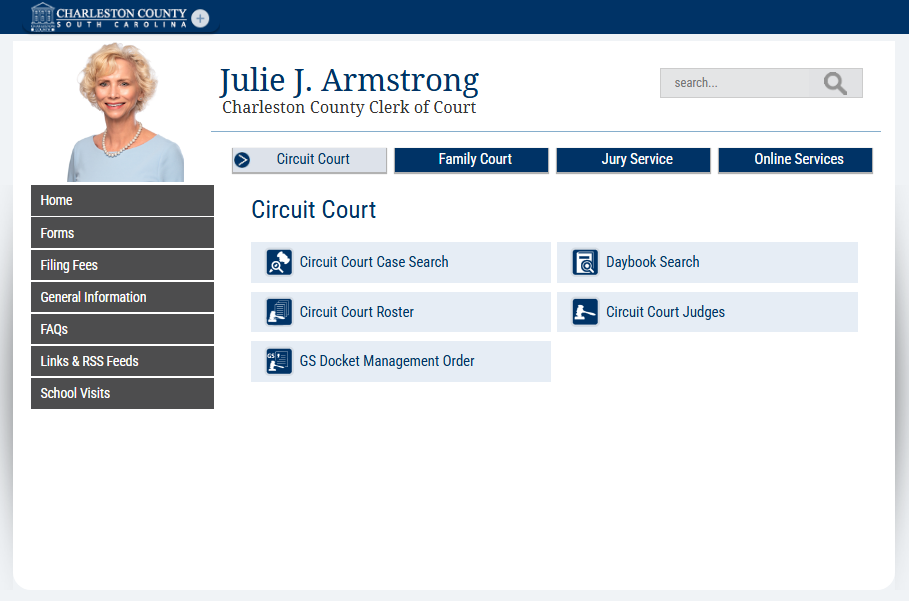
- Circuit Court Cases: Users can search by case number, party name, or attorney name through the https://www.charlestoncounty.org/departments/clerk-of-court/circuit-court.php.
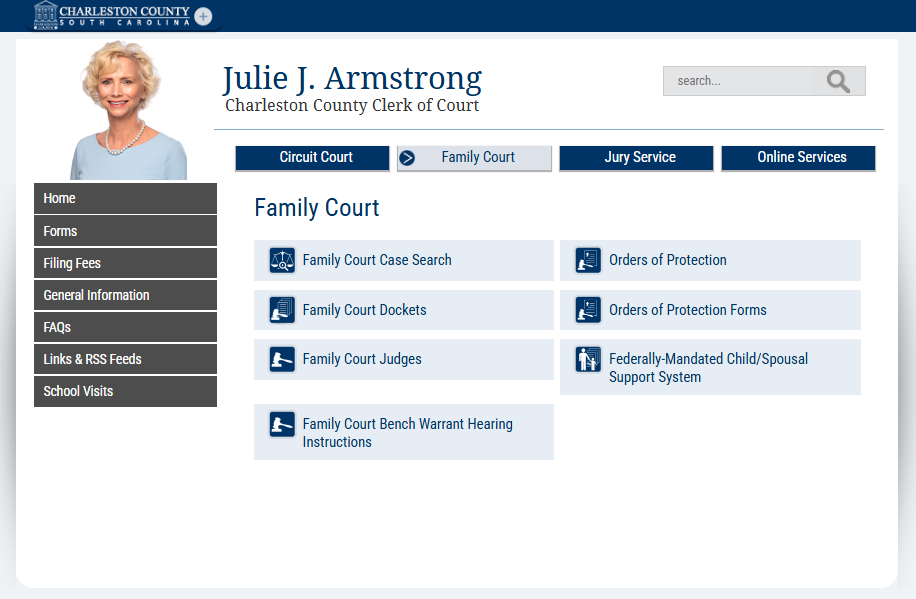
- Family Court Cases: Family Court records, including divorce, custody, and support cases, are searchable via the https://www.charlestoncounty.org/departments/clerk-of-court/family-court.php.
These tools provide public access to court records in real time and are updated daily. Users should note that sensitive information, such as social security numbers or financial details, is redacted for privacy.
Requesting Certified Copies
For official or legal purposes, certified copies of records are often required. The Clerk of Court handles requests both in-person and by mail, with fees clearly defined.
Steps to request certified copies:
- Identify the record: Note the case number, names of parties, and the court division.
- Choose the request method:
- In-person: Visit the Clerk’s Office at 100 Broad Street, Charleston, SC.
- By mail: Send a written request including record details, return address, and payment.
- Include payment: Fees are $1 per page and $10 for a certification stamp.
- Receive documents: Certified copies can be mailed or picked up within a few business days.
Certified copies are legally recognized for court proceedings, property transactions, and other official uses.
Historic Records & Older Cases
Historic records, including older court filings, are stored by the Clerk as part of Charleston County’s archives. Many of these records are not available online but can be requested through archival services.
- Historic records include cases filed before the implementation of electronic records, often stored on microfilm or paper.
- Researchers or legal professionals may contact the Clerk’s Records Division to schedule an in-person review or request copies by mail.
Some restrictions may apply for older cases due to preservation concerns, and fees may vary depending on the volume of documents.
Public Access Policies & Restrictions
Charleston County follows strict policies regarding who can view court records. While most civil and criminal filings are public, certain cases have limited access to protect privacy.
Key points on public access:
- Juvenile cases, adoption records, and sealed court orders are restricted.
- Personal identifiers like social security numbers are redacted in electronic records.
- Access is available during business hours for in-person review or anytime via authorized online portals.
These measures ensure that the public can access records safely without compromising sensitive information.
Who Can Request Records & When
Anyone with a legitimate reason can request official records, whether for personal, legal, or research purposes.
- Eligible requesters: Attorneys, parties in a case, or members of the general public.
- Timing: Records are generally available after filing and docketing. Some records may require a court order before release.
Tips for efficient requests:
- Always provide accurate case information.
- Specify the type of record needed (certified vs. unofficial copy).
- Confirm applicable fees in advance to avoid delays.
By following these steps, individuals can obtain the necessary documents quickly and securely, whether through online case search tools or certified copy requests.
Comprehensive Duties & Responsibilities of the Clerk of Court
The Charleston County Clerk of Court plays a vital role in keeping the county’s judicial system organized, accessible, and reliable. Acting as the record custodian, the Clerk ensures that official records are maintained accurately, filings are processed efficiently, and the daily operations of the court proceed smoothly. This office supports both court staff and the public by managing case records, supervising administrative tasks, safeguarding documents that hold legal significance, and maintaining the Court Docket, which provides an official record of case schedules, filings, hearing dates, and current case statuses to support transparency and informed public access.
Duties in Circuit Court
In Circuit Court, the Clerk manages both criminal and civil cases, overseeing the accurate recording of filings, motions, and judgments. This includes coordinating hearings, trials, and other scheduled proceedings, which form the backbone of effective docket management. The office also handles the processing of fees, fines, and other payments associated with court activities, ensuring that all financial obligations are properly documented.
For criminal cases, the Clerk issues warrants, summonses, and other official documents while maintaining detailed case records. Civil court duties often involve recording liens, judgments, and legal instruments for property and business matters. Through these responsibilities, the Clerk ensures that every case is documented thoroughly, supporting the smooth functioning of the Charleston County court system.
Duties in Family Court
In Family Court, the Clerk’s office manages cases related to divorce, child custody, child support, and guardianship. These duties require careful handling of sensitive documents and filings. The Clerk records petitions, modifications, and agreements while tracking ongoing cases to maintain accurate histories.
The office is also responsible for notifying parties of hearings, processing related fees, and providing certified copies of family court records. Maintaining precise case records ensures that all proceedings are properly documented, helping the court enforce orders fairly and efficiently. By balancing accessibility with confidentiality, the Clerk supports both the legal process and the privacy of families involved in court matters.
Court Administration Functions
The Clerk’s responsibilities extend beyond individual cases to broader court administration. This includes overseeing the daily workflow of the Clerk’s office, coordinating jury management, and preparing reports for county officials. Staff members rely on the Clerk to ensure that filings, dockets, and records are processed on schedule.
Administrative duties include monitoring office operations, collecting fees and fines, and managing jury lists for upcoming trials. The Clerk also prepares statistical and operational reports that help the county maintain transparency and efficiency in its court system. By managing these tasks, the office keeps Charleston County courts organized and accessible for judges, attorneys, and the public.
Custody of Official Records
A key responsibility of the Clerk is maintaining the custody of official records. As the record custodian, the office safeguards both current and archived documents, ensuring they are accurate, secure, and accessible for legal and administrative purposes.
Routine tasks include archiving case files, certifying copies of documents, and responding to requests from the public or legal professionals. These records range from civil and criminal case files to marriage licenses, liens, and property documents. The careful preservation and organization of these records is crucial, as they often serve as legal evidence and a historical record for Charleston County.
Jury Services
Jury service in Charleston County ensures that residents participate fairly in the judicial process. The Charleston County Clerk of Court manages juror services to provide clear instructions, schedules, and support for those called to serve.
How Jurors Are Selected
Jurors are randomly chosen from voter registration lists, driver’s license records, and state ID databases. When selected, individuals receive a juror summons notifying them of their required appearance. The selection process involves:
- Random selection: Names are pulled to create a diverse and impartial jury pool.
- Qualification review: Potential jurors complete a questionnaire confirming eligibility, including age, residency, and absence of disqualifying factors.
- Jury selection process: During court proceedings, attorneys and judges may question jurors to ensure fairness.
This process helps maintain jury management integrity and guarantees that Charleston County residents represent the community in trials.
Online Juror Tools & Portals
Charleston County offers online tools to streamline juror services. Residents can:
- Check juror status via the official portal
- Respond to the summons and confirm attendance
- Request deferrals or exemptions for qualifying reasons
- Access court schedules and related instructions
These online resources save time and reduce confusion, giving jurors immediate access to all necessary information. The Charleston County Government website is the central hub for these services.
Filing Procedures & Fees
The Charleston County Clerk of Court handles all legal filings in the county, including civil, criminal, and family cases. Filing documents requires following specific procedures and paying applicable fees, which vary by case type.
Types of Filings
The Clerk’s office processes several categories of court filings, each with its own requirements:
- Civil filings: Includes lawsuits, small claims, and other disputes between parties.
- Criminal filings: Covers indictments, charges, and motions in criminal cases.
- Family filings: Includes divorces, child custody, support cases, and adoption petitions.
Each filing type is logged into the docket entries to maintain an official record of case activity. The Clerk of Court in Charleston County, SC, ensures these records are accurate and available for public or attorney review according to local regulations.
Filing Methods
The office offers multiple ways to submit documents:
- In-person submissions: Filers can visit the Clerk’s office during business hours to submit filings directly.
- Mail submissions: Documents may be mailed, but must include proper payment and completed forms.
- Attorney email filings: Licensed attorneys may submit certain documents electronically, following county rules.
These options allow flexibility depending on the filer’s needs and the urgency of the filing.
Filing Fee Schedule
Filing fees vary based on case type and filing method. Some examples include:
| Filing Type | Standard Fee | Additional Notes |
|---|---|---|
| Civil Complaint | $150 | Small claims lower ($50) |
| Criminal Case Filing | $100 | May include court costs |
| Family Court | $175 | Divorces, custody petitions |
Fees are collected at the time of filing, and the office accepts checks, money orders, and certain electronic payments.
Electronic vs. Hard-Copy Requirements
Some filings must be submitted as hard copies, while others allow electronic submission:
- Electronic filings (e-filing): Primarily for attorneys, offering faster processing and automatic docket updates.
- Hard-copy submissions: Required for members of the public in certain case types or when notarized documents are necessary.
Proper formatting and adherence to filing requirements ensure documents are accepted without delay.
E-Filing Information
Attorneys in Charleston County often use e-filing systems for efficiency. This method allows:
- Direct submission to the Clerk’s office online.
- Immediate confirmation of filing receipt.
- Automated updates to docket entries.
The public may have limited access to e-filing, depending on case type, and must follow specific instructions provided by the Clerk’s office.
Office Information & Contact Details
The Charleston County Clerk of Court office serves as the official record custodian and primary filings office for both Circuit and Family Courts. Residents and legal professionals can contact the office directly for case information, document filings, or general court inquiries.
Charleston County Clerk of Court: Address & Hours
The Clerk of Court’s office is located at:
Charleston County Clerk of Court
Hugo L. Black Judicial Center
100 Broad Street, Charleston, SC 29401
Office Hours:
- Monday – Friday: 8:30 AM – 5:00 PM
- Closed on public holidays
Contact Numbers:
| Department | Phone | Fax |
|---|---|---|
| Circuit Court | (843) 958-5100 | (843) 958-5110 |
| Family Court | (843) 958-5160 | (843) 958-5170 |
This information ensures that visitors can reach the right department efficiently, whether they are filing documents or requesting records from the court clerk’s office.
Parking & Visiting Tips
Visitors will find on-site parking at the Hugo L. Black Judicial Center, along with metered street parking nearby. For those attending hearings or submitting filings, arriving 15–20 minutes early is recommended to allow for security screening. The building is wheelchair accessible, and public transportation options are available on Meeting and Broad Streets.
Email & Online Inquiries
The Charleston County Clerk of Court also supports digital communication for non-sensitive inquiries. For questions about filings, fees, or court procedures:
- Circuit Court Email: circuitclerk@charlestoncounty.org
- Family Court Email: familyclerk@charlestoncounty.org
An online inquiry form is available through the official Charleston County website, allowing users to request information about case records or court processes without visiting in person.
(FAQs) — About the Clerk of Court
The Charleston County Clerk of Court FAQ provides clear answers for residents seeking information about court procedures and official records. This section addresses common questions about filings, online access, fees, and other services offered by the Clerk’s office.
How do I check my case online?
Residents can check the status of their cases through the Clerk of Court’s official online portal, which allows viewing of docket entries, hearing dates, and updates efficiently. By visiting the Charleston County Clerk of Court website and using the case search feature, users can enter their case number or party name to see current filings, judgments, and scheduled hearings. While most civil and criminal cases are accessible online, certain family or juvenile matters may be restricted to protect privacy, in which case contacting the Clerk’s office directly is recommended.
What fees does the Clerk of Court charge?
The Clerk of Court charges fees for a variety of services, including filing documents, obtaining copies, and processing requests for official records. Civil and criminal case filings, certified copies, marriage licenses, and probate filings all have specific fees that may vary depending on the case type and document. Residents can confirm the latest charges by visiting the filing’s office or contacting the Clerk directly. Payments are generally accepted in cash, check, or credit card, and the office staff can assist with any fee-related questions.
How do I request certified copies of records?
Certified copies of official records, such as judgments, marriage licenses, or probate documents, can be requested directly from the Clerk of Court in person, by mail, or online if available. Requesters should provide the record type and case reference, complete the official request form, and submit any required fees. Once processed, certified copies are delivered either in person or through the mail, and these documents serve as legally recognized evidence for personal, legal, or administrative purposes.
Can I file my family court documents online?
Certain family court filings, including divorce petitions or custody modifications, can be submitted through the Clerk’s e-filing system. Residents need to register for an account on the official website, upload the required documents in the correct format, and pay applicable filing fees electronically. Once submitted, confirmation and docket entries are sent via email, though some filings may still require in-person submission if notarization or original signatures are needed.
Who can help me with jury questions?
The Clerk’s office manages jury service and assists with jury summons, reporting schedules, and eligibility questions. Residents can contact the Jury Office directly by phone or consult the Jury Duty section on the website to check reporting dates, request deferrals, or confirm their status. Staff at the Clerk’s office are trained to answer questions and ensure citizens comply with court procedures efficiently and fairly.