Charleston County Court refers to the organized system of local courts serving Charleston County, South Carolina. These courts operate under the South Carolina judicial system and handle civil, criminal, family, probate, and traffic-related cases within the county. Each courthouse has a specific role, following state laws and procedures, with judges, clerks, and staff managing filings, hearings, and official records. Court decisions affect residents, businesses, and public matters, making the system a central part of the county’s legal operations.
The term “Charleston County Court” represents the system as a whole, while “Charleston County courts” refers to the individual courts within it. This distinction helps users identify the proper courthouse or case type. County court Charleston locations serve residents, attorneys, and public offices, handling cases ranging from civil disputes to criminal proceedings. Typical users include plaintiffs, defendants, jurors, and legal professionals. Through this structured system, local courts ensure fair hearings and reliable legal outcomes across Charleston County.
Charleston County Judicial System
The court system in Charleston County operates as part of South Carolina’s statewide judicial system, with clearly defined roles at the county and state levels. This structure helps courts handle different case types efficiently through a layered legal framework.
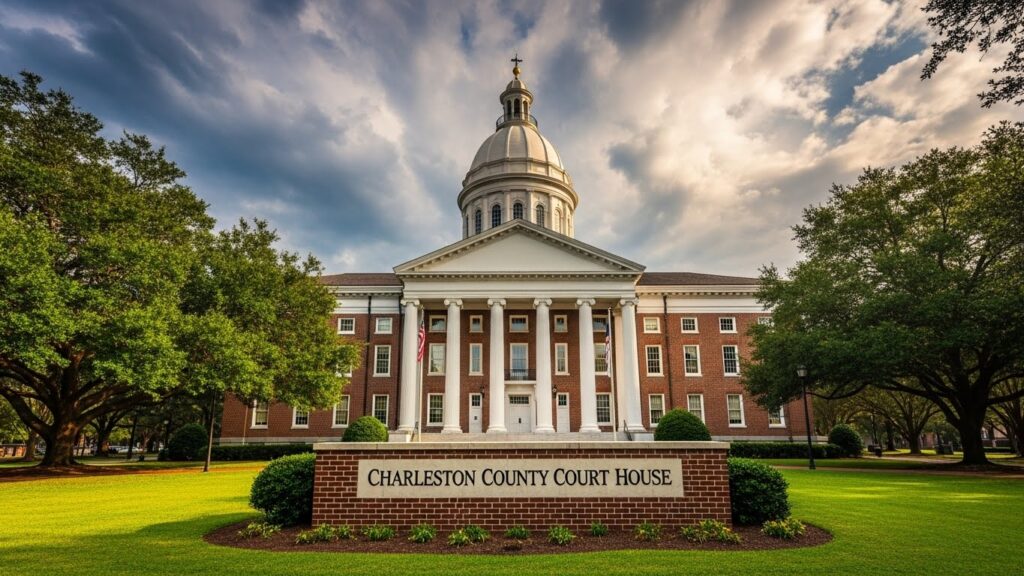
How Charleston County Fits Within South Carolina Courts
Charleston County functions within South Carolina’s unified judicial system. The state constitution sets authority for courts statewide, then assigns daily case handling to county-level courts. This approach creates a local judicial framework that follows uniform state laws. South Carolina’s Supreme Court sits at the top and supervises all lower courts. Below it, the Court of Appeals reviews many trial decisions. At the county level, Charleston County courts manage most in-person hearings and filings. This judicial structure in Charleston County keeps legal processes consistent across the state.
The key role of Charleston County courts includes:
- Managing trials and hearings for local cases
- Applying state statutes and court rules
- Sending appeals upward through the state system
State and County Jurisdiction at a High Level
Jurisdiction determines which court hears a case. State courts focus on statewide authority and appellate review. County-level courts handle most trial matters involving residents and local disputes. In Charleston County, courts hear cases such as traffic offenses, civil claims, family matters, and serious criminal charges. Each court has defined limits based on subject matter and potential penalties. This separation supports a clear court structure and reduces case overload.
Common jurisdiction split:
- State level: appeals, constitutional issues, statewide rules
- County level: trials, evidence review, sentencing, local disputes
Why Multiple Courts Exist in Charleston County
Multiple courts exist to manage volume and specialization. Different case types require different procedures, timelines, and expertise. A single court could not process all matters efficiently. Charleston County uses specialized courts to keep cases moving. Magistrate and Municipal Courts handle minor offenses. Family Court focuses on domestic matters. The Circuit Court addresses major civil and criminal cases. This county-level court system supports fairness and timely resolutions.
Flow of Legal Authority Through the Courts
Legal authority flows from the South Carolina Constitution to the Supreme Court, then downward. Trial courts apply the law first. Appellate courts review decisions for legal accuracy. This flow supports accountability at every level. A case may start in a local courthouse, then move upward through appeals. Each step follows strict rules within the judicial system. This structure protects rights and keeps rulings consistent across Charleston County.
How to Search Charleston County Court Records
Court records in Charleston County Court can be searched by selecting the correct court and using official court system websites or Clerk of Court portals. Each site offers different levels of case lookup, document viewing, and pricing. Searching works best with a step-by-step approach. Charleston County courts follow a structured court system, so records appear only within the court that handled the case. Choosing the right site improves accuracy and avoids missing results.
Correct Method for Searching Charleston County Court Records
A proper court records search starts with identifying the court type. Civil, criminal, family, probate, and magistrate cases are stored separately. Once the court is confirmed, users can run a case lookup using official tools.
Steps used by most users:
- Confirm the court where the case was filed
- Open the official court records search site
- Enter a party name or case number
- Review case information and docket entries
- Request court filings if documents are needed
Most systems show judicial records like filing dates, party names, and current status. Full public court records may require a document request through the clerk of court records.
Official Websites to Search Charleston County Court Records
Charleston County courts rely on state and county-managed platforms. Each site supports different types of court-related information.
South Carolina Judicial Branch – Case Records Search
- Open the Case Records Search Page
Visit the official South Carolina Courts case records search page using the link provided on the website. - URL: https://www.sccourts.org/caseSearch/
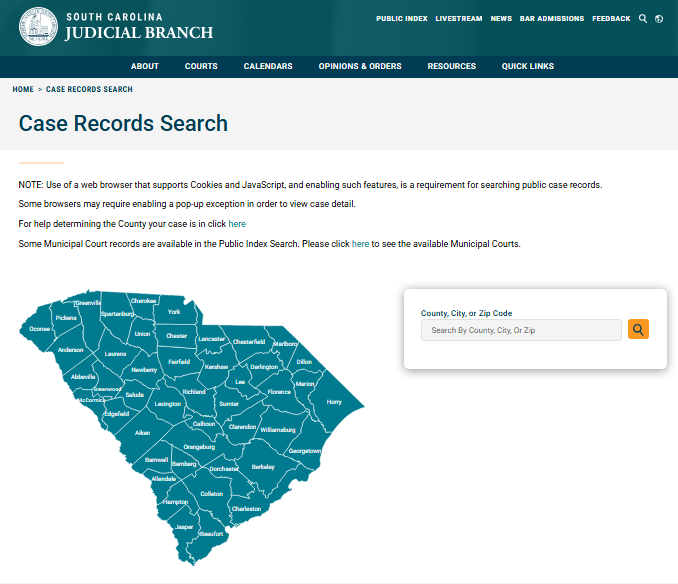
- View the Interactive Map
When the page opens, an interactive map of South Carolina is displayed. This map allows users to choose a specific county or court system. - Select a State or County
Click on the county or court area you want to search. Your selection will redirect you to a new page related to that court. - Review the Access Notice
On the next page, an access or usage notice appears. This notice explains the terms for using the court records system. - Click “I Accept”
Read the notice and select the “I Accept” option to continue. - Access the Case Search Tool
After accepting the terms, the official case search tool opens. This tool allows users to look up case information based on the options provided by the selected court.

- Begin Your Search
Use the available search fields on the tool page to view public case information as permitted by the court.
Charleston County Clerk of Court
URL: https://www.charlestoncounty.gov/departments/clerk-of-court/online-services.php#go
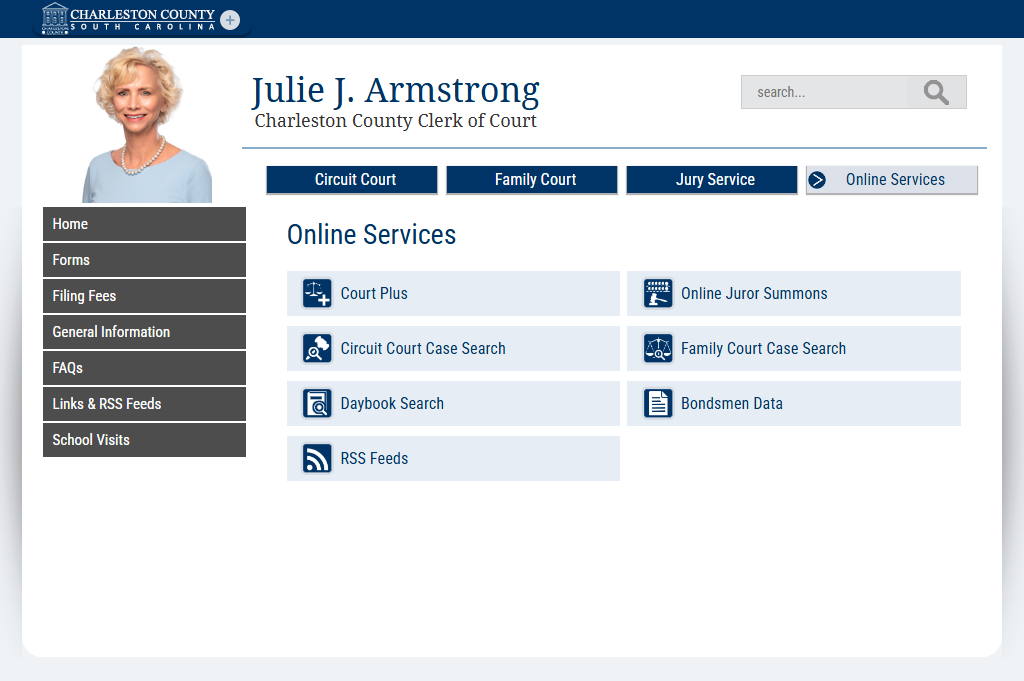
This portal connects users to the clerk of court records and filing services. It supports:
- Court filings
- Certified document requests
- Record verification
Many records require an in-person or written request. Clerk offices manage official copies and certifications.
Costs for Viewing and Getting Court Records
Basic case lookup and docket viewing are often free. Fees apply for document copies and certifications.
| Record Type | Where Available | Typical Cost |
|---|---|---|
| Case summaries | State court search | Free |
| Docket information | Online portals | Free |
| Downloaded court filings | Clerk request systems | $0.50–$2.00 per page |
| Printed copies | Clerk office | $1.00–$2.00 per page |
| Certified court documents | Clerk of Court | $5.00–$10.00 |
Court Structure in Charleston County
The Charleston County courts operate through a clear hierarchy, with each level handling specific types of cases based on legal jurisdiction. This system ensures that legal matters are addressed efficiently and according to the authority of each court.
Charleston County courts are organized to manage civil, criminal, probate, and family law matters, among others. At the base level, magistrate and municipal courts handle minor offenses, traffic violations, and small civil disputes. These courts provide initial hearings and basic rulings, often acting as the first point of contact for residents seeking legal resolution.
Circuit Courts: The Core Trial Level
Above the lower courts are the Charleston County Circuit Courts, which serve as the primary trial courts for serious criminal cases, major civil disputes, and appeals from lower courts. Circuit judges have broader authority and can oversee jury trials, complex litigation, and significant property or contract disputes. The decisions made here carry greater weight and may set precedents for similar cases.
- Civil Cases: Contracts, personal injury, and larger financial claims
- Criminal Cases: Felonies, serious misdemeanors, and major criminal charges
- Appeals: From the magistrate and municipal courts
The circuit court’s role is crucial because it connects the outcomes of lower courts with higher judicial review if needed. Its authority allows for detailed fact-finding and comprehensive legal rulings.
Family and Probate Courts
Separate from the general circuit courts, family and probate courts focus on matters related to domestic relations, guardianship, wills, and estates.
These courts address:
- Divorce, child custody, and support cases
- Adoptions and guardianship proceedings
- Estate administration and probate matters
The family and probate courts operate within their specialized jurisdiction but coordinate with circuit courts when complex legal issues arise. This ensures that sensitive matters receive focused attention while maintaining alignment with the broader judicial framework.
Appellate Review and Higher Authority
While Charleston County courts handle most cases locally, certain decisions can be reviewed by South Carolina’s Court of Appeals or the Supreme Court of South Carolina. These higher courts examine legal interpretations and procedural matters, ensuring consistency across the state. The relationship between county courts and state-level appellate courts maintains a structured pathway for legal review and final judgment.
Types of Courts in Charleston County
Charleston County has a structured court system to handle a variety of legal matters, from major criminal cases to small local disputes, with each court serving a distinct role in ensuring justice.
Circuit Courts in Charleston County
Charleston County Circuit Courts are the primary trial courts for serious civil and criminal cases, including felonies such as robbery or assault, and complex civil disputes like property, contract, or personal injury claims. These courts also conduct jury trials and hear appeals from lower courts, ensuring fair and lawful outcomes. Judges and staff manage case schedules, records, and jury coordination, playing a key role in major legal proceedings and upholding the county’s judicial framework.
Family Court in Charleston County
Family Court focuses on domestic and family law cases, handling divorce, child custody, visitation, and support matters, as well as domestic violence issues and protective orders. This court emphasizes solutions that protect family members while prioritizing children’s well-being, often providing additional services such as mediation, counseling referrals, or parenting resources to support families through legal processes.
Probate Court in Charleston County
Probate Court oversees estates, wills, and guardianships, ensuring assets are distributed according to the deceased’s wishes or state law. It validates wills, appoints guardians for minors or incapacitated adults, and supervises estate administration. By handling these matters separately, the Probate Court provides specialized expertise and relieves other courts from managing sensitive estate and guardianship cases.
Magistrate Courts
Magistrate Courts manage minor offenses and small civil disputes, offering an accessible option for residents. They handle traffic violations, misdemeanors like petty theft, and small claims generally under $7,500, providing fast resolutions that reduce the burden on higher courts while ensuring legal matters are addressed efficiently.
Municipal Courts in Charleston County
Municipal Courts focus on city-level legal matters, enforcing local ordinances, traffic infractions, and code violations within city limits. These courts provide timely resolution for city-specific cases, helping residents comply with local laws while maintaining municipal order and easing the workload of county courts.
Quick Reference Table of Charleston County Courts
| Court Type | Cases Handled | Key Functions |
|---|---|---|
| Circuit Court | Felonies, civil disputes, jury trials | Major trials, appeals, criminal/civil cases |
| Family Court | Family law resolutions, mediation, and court services | Family law resolutions, mediation, court services |
| Probate Court | Estates, wills, guardianships | Estate administration, validating wills |
| Magistrate Court | Minor offenses, small claims, traffic tickets | Quick resolution of minor legal matters |
| Municipal Court | Ordinance violations, city-level offenses | City-specific legal enforcement |
Court Services Available in Charleston County
Charleston County Court offers a wide range of court services that support legal filings, case management, and public use. These services help residents file documents, review court records, manage hearing dates, and receive practical support during court-related matters.
Filing Services for Legal Matters
Charleston County Court provides structured filing services for civil, criminal, family, probate, and traffic cases. Clerks receive and process legal filings according to court rules and deadlines. Clear procedures help reduce delays and filing errors.
Common filing services include:
- New case filings for civil disputes, divorces, and small claims
- Criminal case documents, including motions and court forms
- Probate and estate paperwork submitted through the probate court
- Payment processing for filing fees, fines, and court costs
Many filings take place in person at the clerk’s office, with limited online options for select case types. For example, attorneys often submit motions electronically through approved systems.
Records Viewing and Case Information
Court services include public viewing options for case records and court documents. These services support transparency and allow users to check case status, hearing outcomes, and filed documents.
Records commonly available include:
- Case summaries and docket updates
- Filed motions and court orders
- Judgment history and disposition details
Most records are reviewed through courthouse terminals or clerk-assisted searches. Some older files may require a formal request due to storage or privacy rules.
Scheduling and Court Administration
Court administration teams handle calendars, hearing dates, and courtroom coordination. This work supports fair scheduling and smooth daily operations.
Administrative services cover:
- Hearing and trial scheduling
- Judge and courtroom assignments
- Jury coordination and notices
- Case management system updates
Court staff work closely with judges to keep cases moving forward and to limit unnecessary delays.
Public Support Services
Charleston County Court offers support services that help the public complete common tasks. Staff provide procedural information, approved forms, and directions to the correct court division.
Public support may include:
- Help locating the correct filing office
- Guidance on standard court forms
- Referrals to legal aid and self-help centers
These court services play a key role in helping the public interact with the legal system in an organized and reliable way.
Charleston County Clerk of Court
The Charleston County Clerk of Court manages records, filings, and daily court services for county courts. This office keeps cases moving by handling documents, schedules, and public records with accuracy. The clerk plays a central role in the Charleston County Court system and works behind the scenes to keep court operations organized. The office serves judges, attorneys, and the public through structured administrative support and clear record handling.
Role of the Charleston County Clerk of Court
The Charleston County Clerk of Court acts as the official record keeper for court proceedings. This role focuses on maintaining case files, managing filings, and tracking court activity across multiple court divisions. The clerk receives legal documents, records court actions, and maintains dockets for civil, criminal, family, and probate matters. Clear processes help court services run smoothly and reduce delays for court users.
Key responsibilities include:
- Filing documents submitted by attorneys and self-represented parties
- Recording judgments, motions, and court orders
- Managing hearing schedules and case calendars
- Maintaining official court records for long-term reference
Administrative vs. Judicial Responsibilities
The clerk’s duties remain administrative rather than judicial. Judges make legal decisions, and the clerk supports that work through organization and documentation. Administrative tasks focus on record accuracy, fee processing, and compliance with court rules. Judicial authority stays solely with judges and magistrates.
Administrative duties include:
- Processing filing fees and court payments
- Issuing certified copies of public records
- Maintaining electronic and physical case files
- Supporting courtroom logistics during sessions
Support for Court Operations and Public Records
The clerk supports court operations by providing reliable court services and structured information flow. Accurate records help judges review cases efficiently, and organized systems help staff manage workloads. Public records maintained by the clerk allow residents to review case history, court outcomes, and filed documents through approved channels.
Difference Between Charleston County Courts and State Courts
Charleston County Courts handle local legal matters within county limits, using authority set by South Carolina law. State courts oversee broader legal issues, appeals, and cases that extend beyond county boundaries.
Authority and Jurisdiction Authority
Charleston County Courts focus on cases that start and stay at the local level. Their jurisdiction authority covers traffic cases, misdemeanors, civil disputes with lower dollar amounts, family matters, and probate issues. These courts operate under state law, yet their power remains limited to county-based matters. State courts hold wider authority. They hear serious criminal cases, large civil lawsuits, constitutional questions, and appeals from county courts. This structure supports a clear state vs county courts system, where each level has defined duties.
Key authority differences include:
- County courts manage local filings and hearings
- State courts set legal precedent across South Carolina
- State judges review lower court rulings
When Cases Escalate to State Courts
Some cases move beyond county limits. Escalation often happens after an appeal or when a legal issue exceeds county authority. Felony charges, large financial claims, or constitutional disputes often land in state court.
Common escalation points:
- Appeals from Charleston County Courts
- Felony criminal charges
- High-value civil litigation
How County Courts Interact With the State System
County courts serve as the first step in the judicial process. Records, rulings, and filings move upward when state review is required. This interaction keeps the court system consistent and organized across South Carolina, using shared procedures and legal standards.
Charleston County Courthouse Locations
Charleston County has several courthouse locations that serve different types of legal matters. Each Charleston County courthouse has specific functions and contact information so people can find the right court for their needs.
A courthouse is a public government building where legal proceedings occur, and court officials manage records and hearings. Different court locations help separate types of cases, like criminal, family, probate, and magistrate matters, which keeps court operations organized and easier for the public to use. Each facility offers court locations, clerk services, and public areas for filings, records access, and hearings.
Main Courthouse Facilities & Contact Info
Below are key courthouse facilities in Charleston County with street addresses, phones, and emails:
Downtown Charleston Courts
- County Of Charleston Judicial Center – 100 Broad St., Charleston, SC 29401
- Circuit & Family Court Offices (Clerk of Court)
- Circuit/General Sessions: Phone (843) 958‑5000 • Fax (843) 958‑5020
- Family Court: Phone (843) 958‑4400 • Fax (843) 958‑4434
- Clerk of Court Email: clerkofcourt@charlestoncounty.org
- Charleston County Courthouse – 84 Broad St., Charleston, SC 29401
- Historic courthouse with additional courtrooms and filing spaces
- Charleston County Probate Court – 84 Broad St., Charleston, SC 29401
- Probate matters, wills, estates, guardianship: Phone (843) 958‑5030 • Fax (843) 958‑5044
Federal Court (Separate System)
- J.Waties Waring Judicial Center – 83 Meeting St., Charleston, SC 29401
- U.S. District Court offices • Phone (843) 579‑1401 • Fax (843) 579‑1402
Magistrate Court Locations
Magistrate courts handle smaller civil disputes, traffic, and preliminary hearings. A few are listed below:
- Magistrate Courts: 4045 Bridge View Dr., North Charleston, SC 29405
- Central headquarters with multiple magistrate divisions.
- James Island Magistrate Court: 615 Riverland Dr., Charleston, SC 29412 • (843) 795‑1140
- East Cooper Magistrate Court: 1189 Sweetgrass Basket Pkwy., Mt. Pleasant, SC 29464 • (843) 856‑1205
Public Access & Facilities
All Charleston County courtroom buildings provide public entry points, security screening, and spaces to file documents and pay fees. These locations are chosen so residents can get to the right courthouse facility for their legal matter without confusion. Many offer accessible entrances, elevators, and public information desks. Most courts operate Monday through Friday during regular business hours, and clerks are available to help with records, jury service, and filing questions.
Frequently Asked Questions About Charleston County Court
Charleston County Court includes several local courts that serve different legal needs across the county. These frequently asked questions explain how the court system works, where cases are handled, and how court services support the public.
What courts exist in Charleston County?
Charleston County Court is made up of multiple local courts, each with a defined role based on case type and legal authority. The Circuit Court handles serious criminal cases, civil disputes, and family-related matters, while the Family Court focuses on divorce, child custody, support, and juvenile cases. Magistrate Courts hear traffic cases, small claims, and minor criminal charges across local areas. Probate Court manages wills, estates, guardianships, and marriage licenses, and Municipal Courts address city ordinance violations. This structure allows cases to be processed in the correct courthouse with proper jurisdiction.
How does someone know which court handles a case?
The court that handles a case depends on the type of issue, the amount of money involved, and where the event occurred. Criminal cases are assigned based on charge level, with serious offenses going to Circuit Court and lesser matters handled by Magistrate or Municipal Courts. Civil cases follow filing limits set by state law, which helps direct claims to the proper court. Court service staff and Clerk of Court offices help confirm filing locations, which reduces delays and filing errors.
Are all courts located in the same courthouse?
Charleston County courts do not all operate from one courthouse. Several courts work from the main courthouse in downtown Charleston, yet others operate from separate locations across the county. Probate Court and some Magistrate Courts often function from dedicated buildings to serve local communities more efficiently. Checking the court’s listing or scheduling notice helps confirm the correct courthouse address before a visit.
What does the Clerk of Court do?
The Clerk of Court plays a central role in Charleston County Court operations by supporting daily court services and case flow. This office receives filings, maintains official court records, schedules hearings, and issues certified document copies. The Clerk of Court works as the primary point of contact for court records and procedural questions, helping residents interact with local courts in an organized and reliable way.
Can court records be viewed by the public?
Many Charleston County Court records are open to the public, depending on the case type and privacy rules. Civil, criminal, and probate records are often available through the Clerk of Court, either at the courthouse or through approved online court services. Family Court and juvenile cases usually have limits to protect privacy. The Clerk of Court can explain which records can be reviewed, how copies are requested, and what fees may apply for certified documents.